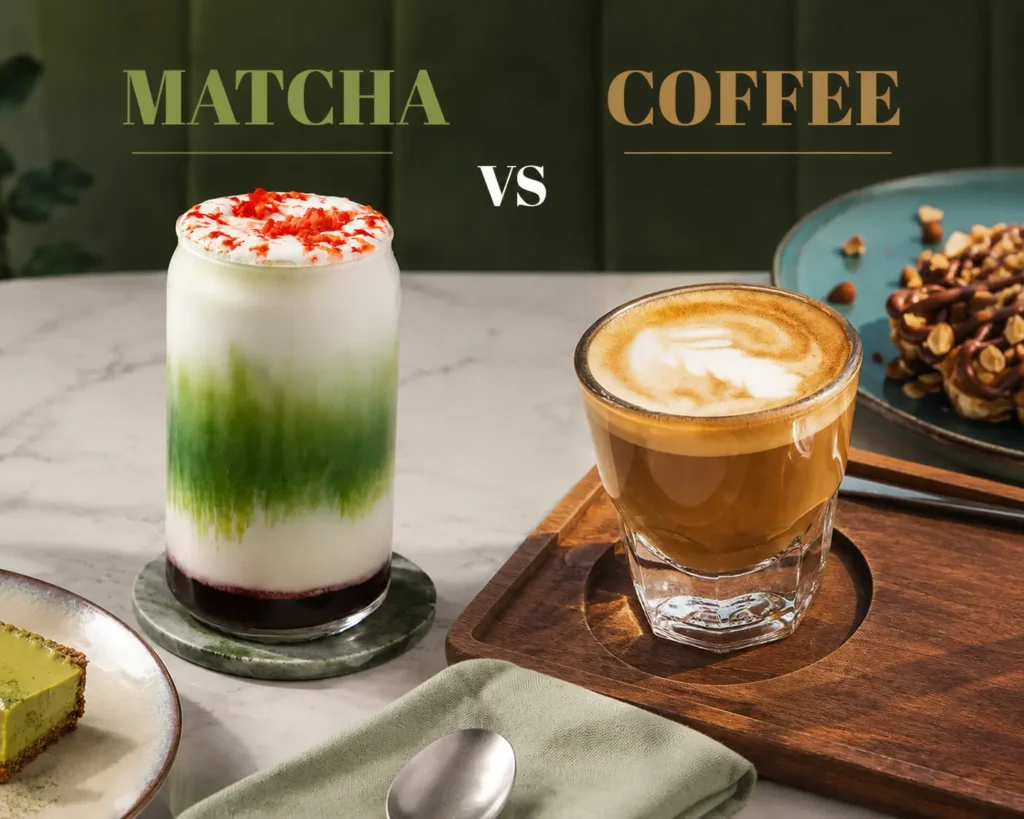
Most people choose their morning drink out of habit, not on purpose. The matcha vs coffee question usually shows up on the day you feel wired by lunchtime and start looking for something calmer. The short answer is this. A normal cup of coffee carries more caffeine than a normal serving of matcha, and matcha tends to feel slower and steadier on the way up.
That gap comes down to two things, serving size and one amino acid. Neither drink wins for everyone. The right pick shifts with the hour of your day, your stomach, and what you are eating with it. If you already work your way through the best coffee in Dubai and wonder what matcha would change, the difference is smaller than most of the internet claims.
This guide compares both drinks on caffeine, energy, taste, comfort, antioxidants and cost. It also covers when each one suits your day, and what to eat with them. Read on and you will know which cup belongs to which hour.
Matcha vs Coffee: Caffeine Compared Per Serving, Not Per Gram
Most caffeine comparisons online cheat a little. They measure per gram, which flatters matcha and tells you almost nothing about your cup.
Per gram, matcha is the stronger of the two. Coffee beans sit in the low tens of milligrams of caffeine per gram of bean, and matcha powder can run several times higher than that. Read quickly, that makes matcha sound like triple-strength coffee.
Then serving size steps in. A 2026 review in Nutrients puts a standard matcha at about two grams of powder whisked into 90 to 100 mL of water, which works out at roughly 72.5 mg of caffeine, around double what the same review gives for a cup of steeped sencha. A cup of coffee is brewed from a far larger weight of ground beans.
Those numbers matter because they set your ceiling for the day. The FDA lists 400 mg a day as an amount not generally linked with negative effects in most healthy adults, so the drink you pick decides how many cups fit inside that. Matcha caffeine vs coffee is a real difference per serving, and a small one next to a second or third cup of anything.
L-Theanine, and Why Matcha Feels Different
Coffee brings caffeine and nothing that softens it. Matcha brings caffeine plus theanine, an amino acid the tea plant builds up when it is grown under shade.
The same Molecules review reported theanine in matcha samples reaching about 44.65 mg per gram. It also noted that theanine and caffeine together may support concentration and alertness more than either compound on its own. That pairing is the reason people describe matcha as calm energy.
Two honest caveats belong here. The research is promising rather than settled, and the review itself calls for more clinical trials on matcha specifically. So if you are weighing matcha or coffee for energy, treat the calm feeling as likely for many people and not guaranteed for you.
You will only find out by testing both across a normal week. Keep the food and the sleep roughly the same, or you are testing those instead.
The Crash Question
Crash is the word people use for the dip that follows a caffeine peak. It is less mysterious than it sounds.
A bigger dose builds a bigger peak, and a bigger peak leaves a more noticeable dip. A smaller dose, absorbed more slowly, flattens both ends of that curve. Matcha usually sits at the smaller end of the dose range, which is a large part of why it feels gentler.
Sugar does its own work here. A sweetened matcha latte can produce the exact slump people blame on coffee.
Dose and sugar explain most of what gets called a crash. Change those two and the drink usually behaves.
Taste, Bitterness and How Each One Is Made
Taste is where the two drinks stop competing and start doing different jobs. One is roasted, the other is not.
Coffee gets its character from the bean and the roast. Lighter roasts lean bright and fruity, darker roasts lean toward chocolate and bitterness. The brewing method shifts it again, which is why an espresso, a filter and a cold brew from the same bag can taste like three drinks.
Matcha tastes green and savoury, with a soft sweetness underneath. Theanine is what gives it that rounded, non-bitter quality. Grade and water temperature both matter. Water that is too hot pulls out harsh notes, and a culinary grade made for baking will taste sharper in a bowl than a higher grade meant for drinking.
Is matcha better than coffee on taste? Nobody can answer that for you, and anyone who tries is selling something. Try both prepared properly, then decide.
Acidity and Stomach Comfort
This is the reason plenty of people switch, and it rarely shows up in caffeine charts. Coffee is the more acidic of the two.
On an empty stomach, that acidity can feel rough, and some people notice it more as the day goes on. Matcha is gentler for many drinkers, partly because it is less acidic and partly because a normal serving carries less caffeine. Neither drink is a fix for a sensitive stomach.
The simplest habit works for both. Eat something first, even something small, and drink water alongside it. If a drink keeps causing you trouble, that is a conversation for your doctor rather than a blog.
Antioxidants, and What That Word Actually Buys You
Both drinks carry antioxidant compounds, and both get oversold on the strength of it. Matcha does have one structural advantage.
You drink the whole leaf. Steeped tea leaves leave most of the leaf behind in the pot, while matcha is ground to powder and whisked into the water, so the compounds come with it. The Molecules review reported total polyphenols in matcha at roughly 169 to 273 mg per gram, and vitamin C at about 1.63 to 3.98 mg per gram, more than double the level found in other green teas.
Coffee is not empty here either. It carries its own antioxidant compounds, mainly chlorogenic acid, which is one reason coffee keeps appearing in nutrition research.
One caution belongs with those numbers. A high reading in a lab test is not the same as a health outcome in a person, and the same review that reports these figures asks for more human trials before anyone makes promises.
What Drives the Cost of Each Cup
Cost per cup gets slippery fast, because the two drinks are priced on completely different things. We are not listing figures here, since they move by venue and by season.
Matcha is priced by grade and harvest. Shade-growing, a short picking window, and stone-grinding all add cost before the powder reaches a café, and grades meant for drinking cost more than culinary grades meant for baking. You use a small amount per cup, so a tin goes further than it looks. Matcha also fades once opened, which pushes good venues to buy in smaller, fresher batches.
Coffee is priced on origin, roast, and method. A single-origin filter and a house espresso can come from very different supply chains, and milk, syrups and cold brew time all add to what lands in the cup.
Neither drink is automatically the cheaper habit. Grade, size, and how many you order in a day decide that.
Which to Order at What Time of Day
Caffeine timing shapes your day more than the choice of drink does. Here is a simple way to think about the hours.
- Early: coffee earns its place. You want a clear lift, and food is usually close behind, which handles the acidity question.
- Mid-morning: either works. This is the slot where matcha suits people who want focus without a sharp peak.
- After lunch: matcha is the safer pick for most. The dose is lower, so it is less likely to reach into your evening.
- Late afternoon and evening: go smaller, or go without. Sleep is easier to protect than to repair.
Food changes the picture too. Coffee sits naturally with breakfast plates and rich desserts, and its bitterness cuts through sweetness. Matcha suits lighter plates, and it also appears on dessert menus as a flavour in its own right, including the matcha mille-crêpe cake Trove has served alongside its coffee list. Both drinks earn a place at the best brunch in Dubai Mall, where the table runs long and people order in waves. If you want neither, the best tea in Dubai runs from mint to floral blends and covers the same social hours.
Order by the hour and by what is on the table. Choosing matcha or coffee for energy gets much easier once the timing is right.
Who This Comparison Suits, and When to Leave It Alone
This works for you if you drink caffeine most days and want more control over how your afternoon feels. It also helps if coffee has started to bother your stomach, or if you keep waking at 3 am and suspect the last cup.
Leave it alone in a few cases. If you are pregnant, breastfeeding, taking medication, or managing a heart or anxiety condition, your caffeine ceiling is a medical question and not a menu question. If you sleep well and enjoy your coffee, switching to matcha to chase a wellness claim will mostly cost you a drink you already like. And if you are using either one to paper over short sleep, no cup fixes that.
The matcha vs coffee choice comes down to dose and timing, not loyalty to a leaf or a bean. Pick the drink you actually enjoy, then move it earlier in the day.
Pick the Cup That Fits the Hour
Coffee carries more caffeine per cup, and matcha carries less, with theanine along for the ride. That is the matcha vs coffee comparison in one line, and everything after it comes down to your stomach, your sleep, and the food in front of you.
Trove serves locally roasted coffee, cold brew, espresso, and a full tea list on the ground floor of Fashion Avenue in The Dubai Mall, with the fountain in view. Try both across a morning and an afternoon and see which one your day prefers. For group bookings or anything you would like arranged in advance, contact us.