Sushi types confuse almost everyone at first, and menus rarely help: nigiri, maki, uramaki, temaki, and a wall of rolls with invented names. The good news is that the whole system runs on a handful of building blocks, and once you know them, every menu on earth reads the same way.
This guide walks through the varieties you will actually meet, what separates them, and how to order with confidence. It works whether you are planning your first platter or booking the best dinner in Dubai and want the Japanese section of the menu to make sense before you sit down.
First, What Counts as Sushi
One ingredient defines the category, and it is not fish. Sushi means vinegared rice, seasoned with rice vinegar, sugar, and salt; whatever sits on or inside that rice is the variable.
That single fact clears up the biggest beginner mix-up. Sashimi, the sliced raw fish served on its own, is not technically sushi at all, because there is no rice involved. Order it, love it, but file it beside the category rather than inside it.
A Short History, Quickly
Sushi began as preservation: fish packed in fermented rice centuries ago in Southeast Asia, refined in Japan, and stripped down in Edo-era Tokyo into the fast, fresh style the world now recognizes. The vinegared rice that once preserved the fish became the point of the dish.
Knowing that much explains the menu’s logic. The formats below are not random inventions; they are stages of that same idea, shaped by what needed holding, wrapping, or showing off. Purists still argue over where tradition ends and novelty begins, and the argument is part of the culture; order what tastes good and let them have it.
The Main Sushi Types at a Glance
Nigiri is the classic image: a hand-pressed pillow of rice with a slice of fish or seafood draped over it, sometimes held by a thin band of seaweed. It puts the main ingredient front and center, which makes it the purist’s pick. Common toppings run from salmon and tuna to shrimp, sea bass, and sweet egg omelet, and two pieces per order is the standard rhythm.
Maki is rolled sushi, with rice and fillings wrapped in nori and sliced into rounds. Temaki takes the same idea and hand-rolls it into a cone you eat like an ice cream, no chopsticks required.
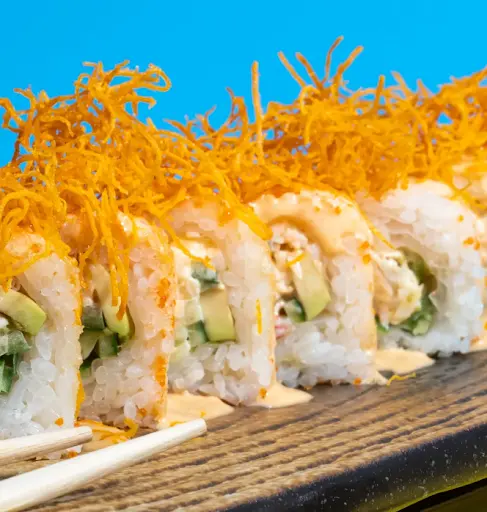
Uramaki flips the roll inside out, with rice on the outside and the seaweed hidden within; most famous Western rolls live here. Gunkan wraps a tall collar of nori around rice to hold loose toppings like roe, and chirashi skips the shaping entirely, scattering fish and garnishes over a bowl of seasoned rice. Chirashi in particular suits anyone who wants the flavors without the assembly, and it eats like a meal rather than a snack.
Inari rounds out the family: a pocket of sweet fried tofu stuffed with rice, no fish involved, and a gentle option for anyone easing in. Those are the sushi types’ names you will hear most often, and nearly everything else on a menu is a variation on one of them.
Rolls, Decoded
Rolls deserve their own section because they cause the most menu anxiety. The different types of sushi rolls sort into three families: hosomaki, the slim single-filling rolls like cucumber or tuna; futomaki, the fat rolls that pack several fillings at once; and uramaki, the inside-out style described above.
Named rolls are where kitchens improvise. A California roll is uramaki with crab or crab stick, avocado, and cucumber; a spicy tuna roll adds chili mayo to chopped fish; dragon and rainbow rolls layer extra toppings over the outside for show. None of these are traditional, and none of that matters if they taste good. Tempura rolls add crunch with fried shrimp or vegetables, and baked rolls trade raw fish for warm toppings, which makes both useful gateways for hesitant guests. Vegetable rolls deserve a nod too: cucumber, avocado, and pickled radish all headline rolls of their own, and none of them are consolation prizes.
Most sushi roll types come down to two choices: what wraps them and what fills them. Search “sushi rolls types,” and you will drown in lists; remember wrapper plus filling, and you can decode any of them at the table.
Trying different types of sushi in one sitting is the honest way to find your favorite, which is exactly what mixed platters are for.
How to Order As You Know
A few habits mark you as comfortable. Nigiri can be eaten with clean hands, and at traditional counters that is normal rather than rude; rolls behave better with chopsticks.
Dip fish-side down when you use soy sauce, so the rice does not drink half the dish and fall apart. Go easy on wasabi, since many kitchens already tuck a measured amount under the fish, and use the pickled ginger between bites as a palate reset rather than a topping.
Order in rising intensity if you can: lighter white fish first, richer cuts like salmon and tuna later, cooked and sauced rolls at the end. Nothing is ruined by ignoring this; plenty is gained by following it. If the menu offers a tasting platter, take it on a first visit, since it answers more questions than any guide can.
Common Beginner Mistakes
Drowning the rice in soy is the big one, followed by mixing wasabi into the soy dish, which good chefs quietly mourn. Eating nigiri in two bites also works against you, since the balance is built for one.
None of these will get you thrown out anywhere relaxed. They are simply habits worth unlearning early, because the food genuinely tastes better without them. Ginger belongs between pieces rather than on top of them, and green tea or a citrus drink resets the palate better than soda.
A Health Note Worth Knowing
Sushi earns its healthy reputation when the rice stays in proportion, and the fish stays fresh. The FDA’s dietary advice recommends that adults eat at least 8 ounces of seafood a week (FDA fish advice), and a sushi night is one of the easier, more enjoyable ways to get there.
If you are pregnant or ordering for young children, choose cooked and lower-mercury options; the same FDA guidance sorts common fish into best-choice lists worth a skim before you go.
Who Sushi Suits, and When to Skip It
If raw fish is a hard no, sushi still works: cooked shrimp, grilled eel, vegetable maki, and inari carry a full meal without a single raw slice. Texture-cautious eaters do best starting with uramaki, where rice softens every edge. Budget-cautious diners can relax as well: platters and rolls scale to the table, and a satisfying first outing does not require the premium cuts.
Skip the category when you want strictly traditional Edomae craft from a specialist counter, because an international kitchen is built for range rather than orthodoxy. Know which experience you are after and order accordingly.
Sushi With a Fountain View
At Trove in The Dubai Mall, fresh sushi shares the menu with chargrilled mains, pizza, and desserts, which makes it a friendly setting for a first platter: everyone at the table finds a lane, and nobody performs. Groups with one sushi skeptic are the house specialty, since the wider menu removes the standoff. The selection rotates, so ask the team what is freshest rather than ordering from memory.
Make an evening of it. Time the table to the water shows with the Dubai Mall fountain show timings guide, then let the best shisha in Dubai carry the after-dinner hour on the terrace. The terrace adds the part no counter can: open air, the fountain running, and the tower lit overhead while the platter lands.
Roll the Evening On
Bring the questions from this guide and let the menu answer them one plate at a time. Book through SevenRooms or call +971 4 347 7444. You can also message +971 50 881 3415 on WhatsApp, email social@troverestaurant.com, or tell us who is coming and how adventurous they feel and the team will take it from there.